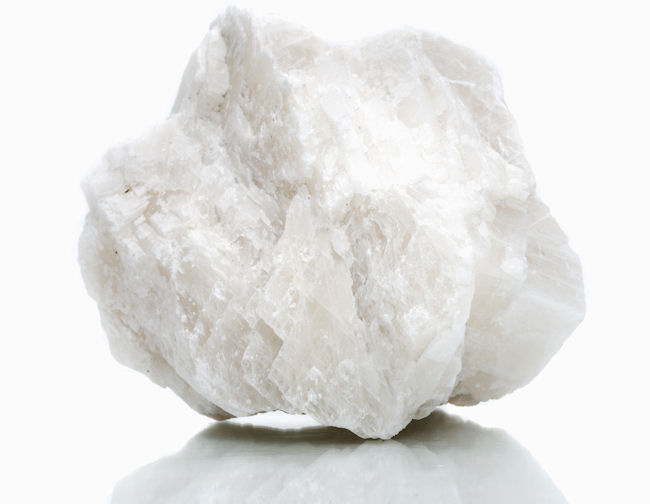
Limestone is a sedimentary rock made mainly of calcium carbonate (CaCO₃), most commonly in the form of the mineral calcite. It often forms from the accumulation of shells, coral, and other marine material that settles on the seabed. Over millions of years, these layers are compacted and hardened into limestone.
Its wide range of uses and its natural availability make limestone one of the most important raw materials used by societies around the world.
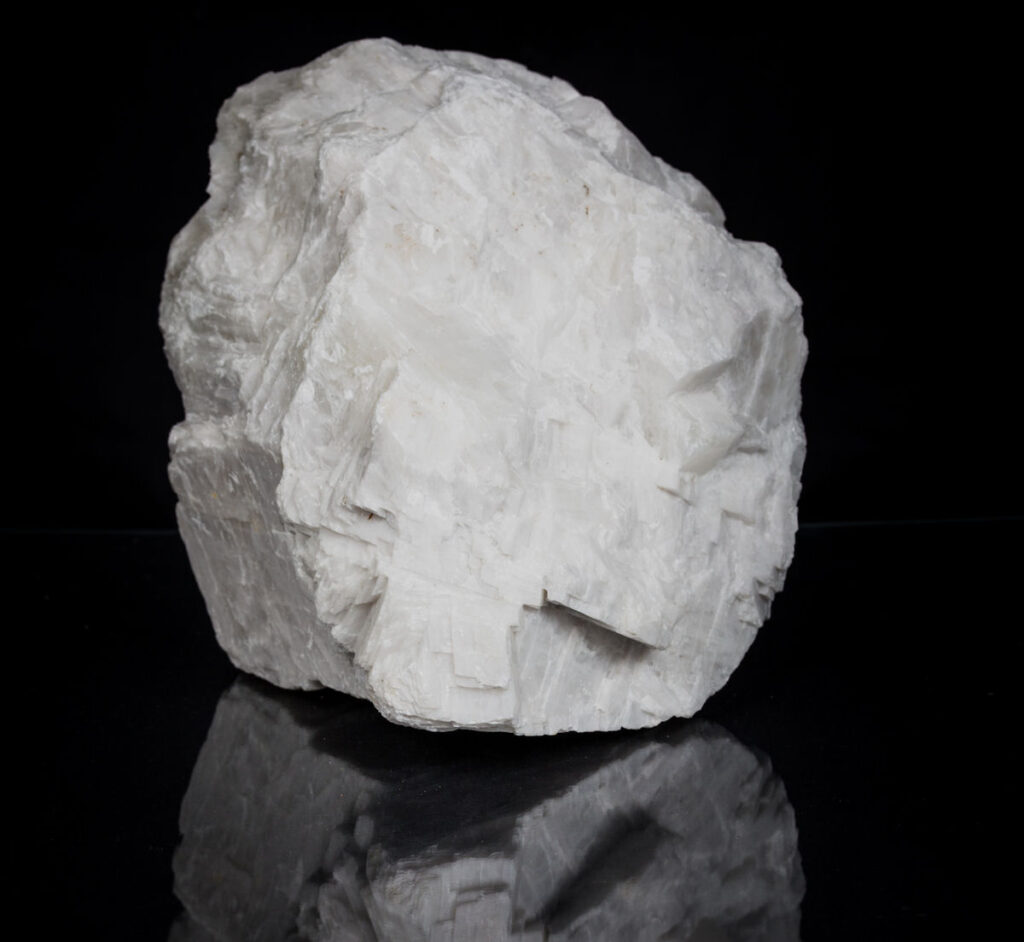
Colour: Limestone can be white, beige, grey, or even bluish. The colour depends largely on impurities such as clay, sand, iron compounds, or organic material mixed into the stone.
Texture: It is usually fine-grained, but the texture can vary quite a bit. Some limestones are smooth and dense, while others are rough and porous, especially if they contain fossil fragments or have been weathered.
Hardness: Limestone is relatively soft compared to many other rocks. This makes it easy to cut, shape, and process, which is one reason it has been widely used in construction for centuries.
Reaction with Acid: One of limestone’s defining characteristics is its reaction with acids. When a weak acid such as vinegar or lemon juice is dropped onto limestone, it will fizz as carbon dioxide gas is released. The fizzing is most obvious when the limestone contains a high proportion of calcite and the surface is fresh. On very dense or weathered surfaces, the reaction can be slower or subtler.
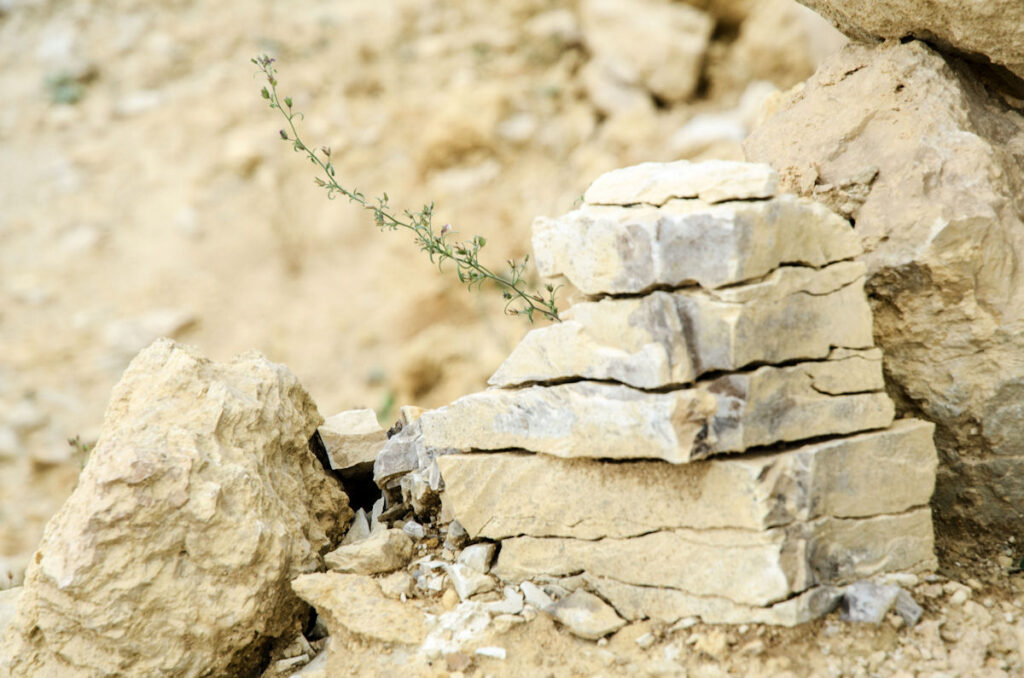
Limestone forms mainly in marine environments, where calcium-rich water allows calcium carbonate to build up over time. This happens in several ways.
Biological accumulation
When marine organisms such as corals, molluscs, and foraminifera die, their shells and skeletons settle on the seabed. Over long periods, these layers compact and harden into limestone.
Chemical precipitation
In warm, shallow seas, calcium carbonate can also form directly from seawater. This process creates small rounded grains, such as ooids, which can later become limestone.
Evaporative processes
Limestone can also form in freshwater environments, such as lakes and springs, where evaporation and mineral-rich water lead to calcium carbonate being deposited. These deposits are often known as travertine or tufa.
Limestone is part of a natural cycle that influences how carbon moves through the Earth.
Formation
Limestone forms mainly in marine environments as shells, coral, and other calcium-rich materials accumulate on the seabed over long periods of time.
Weathering
Rain, temperature changes, and other natural processes gradually break down limestone, releasing calcium carbonate into soil and water.
Transport and re-formation
Calcium carbonate is carried by rivers and groundwater to lakes and oceans, where it can again become part of new limestone deposits.
Metamorphosis
When exposed to high heat and pressure, limestone can transform into marble, a harder metamorphic rock used in construction and sculpture.
Role in the carbon cycle
Through its formation and breakdown, limestone stores carbon over geological timescales and releases it slowly back into natural systems, making it a long-term part of Earth’s carbon balance.
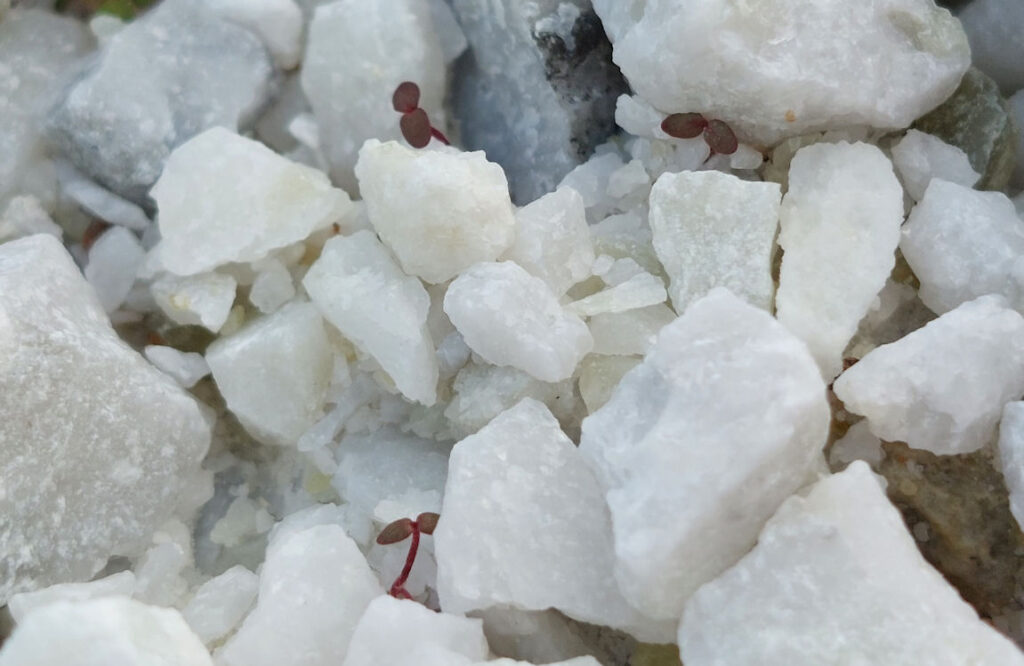
Limestone has been used by people for thousands of years. Its availability, durability, and workability have made it a practical material in construction, agriculture, and industry across different periods.
Historically, limestone was widely used in buildings, monuments, and infrastructure, from early stone structures to churches, cathedrals, and castles that still stand today. Lime produced from limestone also played an important role in agriculture by improving soil conditions and supporting food production.
Today, limestone remains a key raw material in modern society. It is essential in cement and concrete production and, when processed into burnt lime, its high reactivity makes it valuable in industries such as steelmaking and chemical manufacturing.
Limestone is also used in environmental applications. Crushed limestone helps treat water and wastewater and is used in flue gas desulphurisation to reduce emissions.
Beyond large-scale uses, limestone is present in many everyday products, including toothpaste, paint, and paper, often without being noticed.
Beyond its role in industry and everyday life, limestone is also part of natural systems.
Wildlife habitats
Limestone areas support specific ecosystems. Caves, cliffs, and lime-rich soils provide habitats for bats, birds, and specialised plant species.
Groundwater storage
Limestone formations often contain aquifers that store and carry groundwater, supplying fresh water in many regions.
Carbon cycle
Limestone plays a role in the long-term carbon cycle by binding carbon dioxide into carbonate rock over geological timescales.
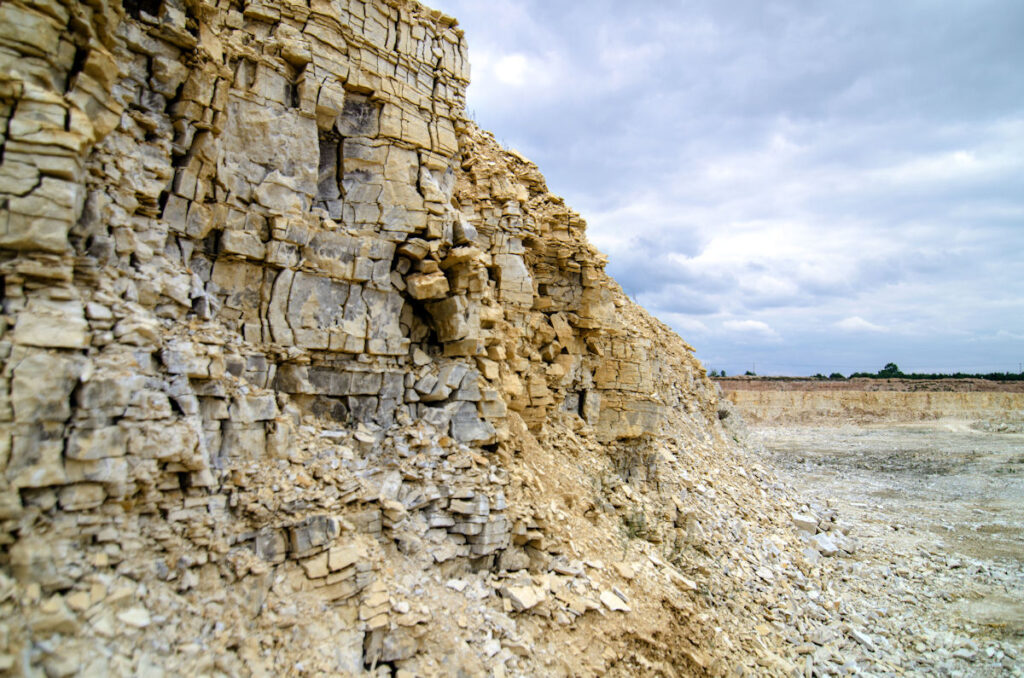
Did You Know? – A Few Facts About Limestone
Fossil treasure troves
Many limestone deposits are rich in fossils. They preserve traces of ancient marine life and help scientists piece together how Earth’s environments and climates have changed over millions of years.
Cave formation
Some of the world’s most spectacular caves have formed in limestone. Places like Carlsbad Caverns and Mammoth Cave were shaped as slightly acidic water slowly dissolved the rock over time.
The Taj Mahal
The Taj Mahal is clad in marble, a metamorphic rock that forms when limestone is subjected to heat and pressure. It’s a well-known example of how limestone can be transformed into something both durable and beautiful.
A sculptor’s delight
Marble, derived from limestone, has long been favoured by sculptors. Its relatively soft structure, fine grain, and even colour make it ideal for carving intricate details with precision.
The Future of Limestone
Looking ahead, limestone remains an essential resource. Through responsible extraction practices and ongoing technological development, its benefits can be realised while environmental impacts are carefully managed.
Limestone already plays a role in areas that matter for the future, from cleaner industrial processes to more efficient and durable construction materials. Its applications continue to evolve as demands change.
Limestone is rarely noticed on its own, but it plays a role in many things people rely on every day. It has been used for centuries and continues to support modern infrastructure and industry. In the future, it will remain a basic, necessary raw material for how society works.
We use cookies to give you the best internet experience. By giving consent, you accept the use of cookies in accordance with our cookie policy.

When you visit any web site, it may store or retrieve information on your browser, mostly in the form of cookies. Control your personal Cookie Services here.